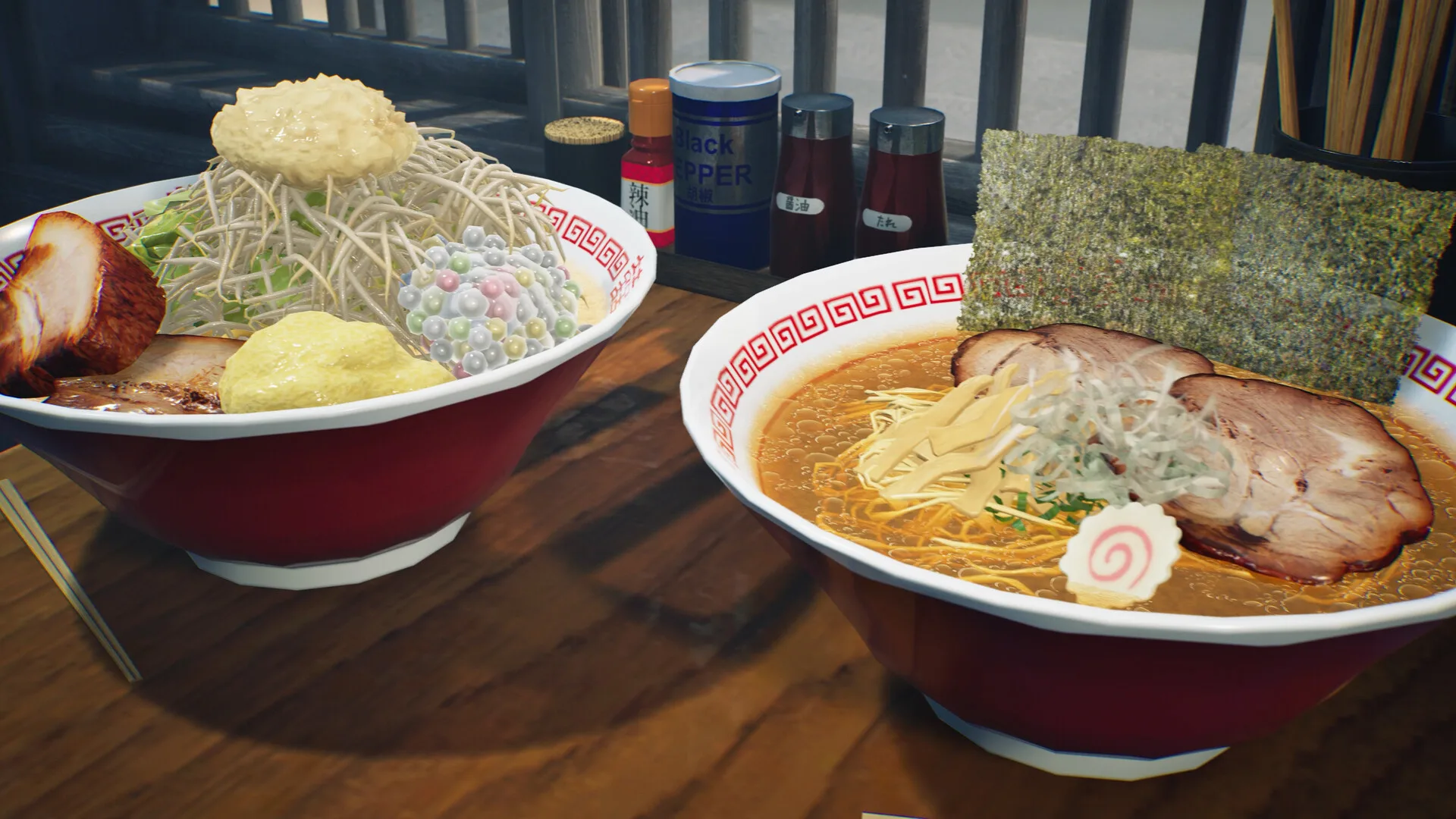
- Japanese Ramen Simulator ramen shop gameplay supports solo play or online co-op with up to six players.
- Core loop: prepare ingredients, cook noodles, build bowls with broth and toppings, serve customers, reset stations.
- Co-op strategy: divide the team into order coordination, prep, cooking, and flexible support roles.
- Layout matters: short movement routes between storage, cooking, and serving keep busy service from stalling.
- Current status: the game is in Steam Early Access with 10 interface languages and 88% positive reviews.
Ramen Shop Fundamentals
Your Japanese Ramen Simulator ramen shop runs on a repeatable production cycle: preparation, cooking, assembly, service, and reset. Whether you play alone or with a full six-player crew, the shop succeeds when every bowl moves through this cycle without delays. The game entered Steam Early Access on October 9, 2026, developed and published by Wild Dog.
The official announcement trailer highlights the core selling points of the experience.
Video Highlights:
- Cooperative ramen shop management for up to six players
- Division of labor across cooking and shop upkeep
- Custom recipe creation and shop design
- Full restaurant management from ingredients to customer service
| Game Detail | Information |
|---|---|
| Developer / Publisher | Wild Dog |
| Release Status | Steam Early Access (October 9, 2026) |
| Player Support | Up to 6 players online co-op, plus solo |
| Interface Languages | 10, including English, Japanese, Chinese, Korean |
| Steam Review Score | 88% positive |
Track announcements through the Steam store page, the Steam Community Hub, and the official Discord. No official redemption code system has been confirmed, so treat any circulating codes as unverified.
Solo Opening: Step-by-Step Flow
A solo ramen shop replaces verbal coordination with a fixed personal workflow. Follow the sequence below for your first days of operation.
Open and Inspect the Workspace
Check the cooking area, ingredient stations, serving counter, and customer space. Identify where ingredients are stored and where finished bowls go. Clear frequently used stations before customers arrive.
Prep Ingredients Before the Rush
Gather noodles, broth components, and toppings before orders arrive. Keep prepared items close to the cooking and assembly stations to cut travel time during peak service.
Cook Noodles and Build the Bowl
Process the noodles, combine them with the selected broth, and add the requested toppings. Always confirm the active order instead of assembling bowls from memory.
Serve and Reset
Match each bowl to the correct customer, deliver promptly, then return to restock and prepare the next round of ingredients. A consistent serve-and-reset rhythm prevents clutter.
Review and Refine
After each service period, identify which station caused delays, shorten that route, and adjust the menu toward combinations that fit your workflow.
Do not wait for an order before starting every preparation task, avoid mixing up bowls when multiple orders are active, and never let one unfinished task block the entire kitchen workflow.
Six-Player Co-op Roles
Cooperative sessions work best when the team divides the restaurant workflow into distinct responsibilities rather than everyone performing the same task.
Order and Service Coordinator
- Priority: High
- Monitor incoming orders and announce requirements
- Deliver completed bowls to the correct customers
- Confirm when each order has been served
Ingredient and Prep Worker
- Priority: High
- Gather ingredients before they are needed
- Prepare noodles, broth components, and toppings
- Report shortages immediately
Cook and Assembly Worker
- Priority: High
- Handle active cooking and bowl assembly
- Combine noodles, broth, and requested toppings
- State which order is being assembled to avoid duplicates
Flexible Support Player
- Priority: Medium
- Fill gaps when a station overloads
- Restock ingredients and clear bottlenecks
- Announce station changes before taking over a task
| Role | Priority | Key Communication |
|---|---|---|
| Service Coordinator | High | Call out new orders and confirm service |
| Prep Worker | High | Report shortages and ready ingredients |
| Cook / Assembly | High | State the order being assembled |
| Support | Medium | Announce station changes before moving |
In multiplayer, communicate before changing stations or taking over another player's order. Silent task-swapping is the most common cause of duplicate bowls and dropped orders.
Recipes, Ingredients, and Layout
Menu planning in the Japanese Ramen Simulator ramen shop centers on combining noodles, broth, and toppings in a consistent preparation order.
| Recipe Approach | Preparation | Best For | Performance Focus |
|---|---|---|---|
| Basic Noodle-and-Broth Bowl | Noodles, broth, combine, check order | Learning the core loop | Fast, consistent serving |
| Topped Ramen Bowl | Add requested toppings to a base bowl | Order accuracy practice | Fewer topping mistakes |
| Prepped Service Batch | Batch ingredients before the rush | Busy periods and co-op kitchens | Reduced travel time |
| Custom Menu Experiment | Test new combinations off-peak | Original menu development | Variety vs. prep time |
Ingredient tiering should be judged by earning potential, preparation time, customer demand, and how well a combination fits your current restaurant stage. High-efficiency staples (S-tier) keep preparation predictable with broad demand, while complex combinations (C-tier) require space, staff support, and a stable workflow before they pay off.
Layout planning follows the same logic: shorten the route between storage and preparation, keep essential stations away from narrow corners, and separate cleaning routes from the busiest cooking path.
| Layout | Recommended For | Core Problem Solved |
|---|---|---|
| Solo loop | One player | Repeated walking across the same route |
| Two-player zones | Co-op pairs | Players competing for the same station |
| Six-player zones | Full teams | Crowding and blocked ingredient access |
Rankings shift with Early Access balance updates. Recheck ingredient and combination tiers after each patch before committing your menu.
Staffing and Management Checklist
Staff are most valuable when repetitive duties—cleaning and dish handling—start pulling time away from cooking and serving. Compare assistance costs against the revenue lost from delayed orders before hiring.
| Support Option | Best Time to Hire | Solo Recommendation | Co-op Recommendation |
|---|---|---|---|
| Cleaning support | Cleaning repeatedly interrupts service | High priority during growth | When all players cover production |
| Dish-handling support | Dishes accumulate faster than processing | Consider early | When a dedicated player isn't possible |
| General assistance | Stable demand, competing duties | Target the longest interruption | Cover neglected duties only |
| No-staff plan | Early operation, coordinated teams | Compact layout required | Clear responsibility assignments |
Ramen Shop Milestones:
- Master the prep-cook-serve-reset cycle
- Establish a layout with short movement routes
- Assign clear co-op roles before opening
- Develop a prepped service batch for rush periods
- Review staffing needs after service delays appear
- Track Early Access updates for balance changes
Wild Dog has committed to improving the game based on community feedback during Early Access. Check the Steam news page for patch notes that may affect recipes, layouts, and staff behavior.
FAQ
Q: How many players can run a Japanese Ramen Simulator ramen shop together?
The game supports solo play and online co-op for up to six players. Teams should split responsibilities across order coordination, preparation, cooking, and flexible support.
Q: Is there a code redemption system in Japanese Ramen Simulator?
No official redemption code system has been confirmed. Any codes circulating online should be treated as unverified. Track official announcements through Steam and the official Discord for future reward events.
Q: What is the best early strategy for a new ramen shop?
Focus on learning the full preparation-cooking-assembly-service loop with simple bowls before expanding your menu. Pre-prepare common ingredients before the rush and keep stations close together to reduce travel time.
Q: When should I hire staff in my ramen shop?
Hire help only when cleaning or dish handling creates a measurable service delay. Compare the assistance cost against revenue lost from delayed orders, and prioritize the task that interrupts your workflow the longest.