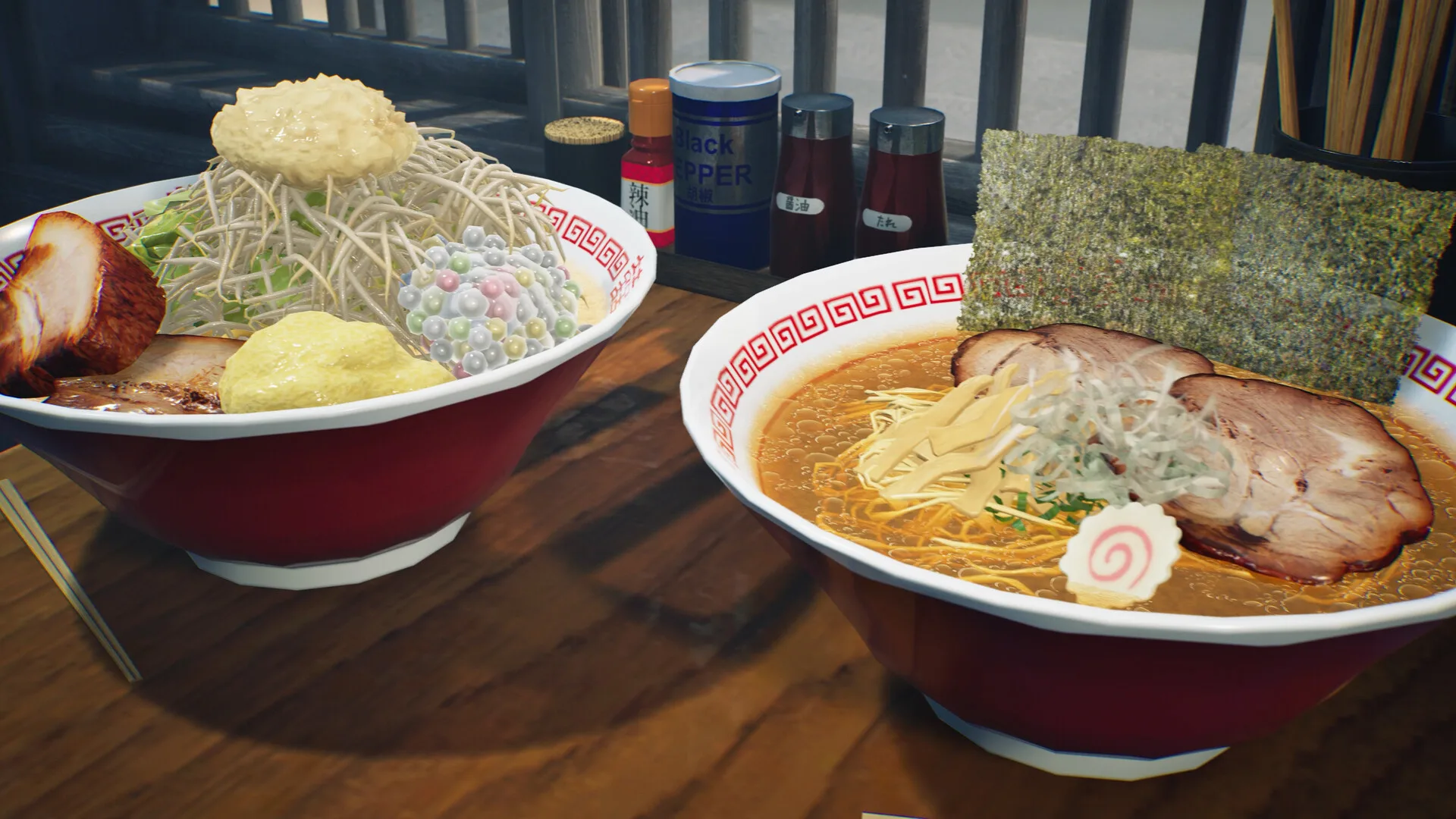
- Japanese Ramen Simulator beginner guide: Master the prep, cook, assemble, serve loop first
- Prep early: Stock ingredients before the customer rush, not after orders arrive
- Up to 6 players: Divide the kitchen into prep, cooking, assembly, and service roles
- Solo play: Use one short, repeatable movement route between stations
- Early Access: Game launched October 9, 2026 on Steam with 88% positive reviews
Getting Started: Your First Ramen Shop
Japanese Ramen Simulator is a cooperative ramen restaurant simulator developed and published by Wild Dog, available in Steam Early Access since October 9, 2026. It supports solo play and online co-op for up to six players. Success in the first days depends less on speed and more on building a clean, repeatable workflow around your kitchen.
Video Highlights:
- Official announcement trailer showing six-player co-op ramen shop operation
- Division of labor: preparing dishes while teammates manage the shop
- Core loop of cooking noodles, assembling bowls, and serving customers together
Before opening day, understand the four functional zones of your shop:
| Zone | Purpose | Beginner Priority |
|---|---|---|
| Ingredient stations | Storage and prep of noodles, broth, toppings | ★★★★★ |
| Cooking area | Noodle processing and broth work | ★★★★★ |
| Assembly point | Combining bowl components and toppings | ★★★★ |
| Dining and serving area | Customer seating, delivery, cleanup | ★★★ |
Do not expand your workload during the first days. Learn the full prep-cook-serve-reset loop with a simple menu before adding complex combinations or extra responsibilities.
The Core Service Loop, Step by Step
Every bowl of ramen follows the same production sequence. Internalize this order before worrying about speed or profit optimization.
Open the Restaurant and Review the Workspace
Inspect the cooking area, ingredient stations, serving area, and customer space. Identify where ingredients are stored and where finished bowls go. Keep frequently used stations clear before customers arrive.
Prepare Ingredients Before the Rush
Gather what upcoming orders need. Prepare noodles, broth components, and toppings in sequence, and keep prepared items close to the cooking and assembly stations.
Cook the Noodles and Build the Bowl
Process the noodles, combine them with the selected broth, and add requested toppings. Always check the finished bowl against the order rather than assembling from memory.
Serve and Reset the Stations
Match each bowl to the correct customer, deliver promptly, then return to restock and prepare the next round of ingredients.
Repeat and Refine
Keep a consistent serve-and-reset rhythm. Use quiet moments to restock rather than standing idle, so the shop never becomes disorganized mid-rush.
Waiting until an order arrives to begin every preparation task is the number one cause of delays. When several customers arrive together, unprepared stations create a bottleneck that stalls the entire kitchen.
Solo Play vs Co-op: How the Workflow Changes
The Japanese Ramen Simulator beginner guide approach differs depending on player count. Solo runs replace verbal coordination with a fixed personal routine, while cooperative kitchens succeed through clear role separation.
Order and Service Coordinator
- High priority role
- Monitors incoming customer orders
- Announces requirements to the kitchen
- Delivers completed bowls to correct customers
Ingredient and Prep Worker
- High priority role
- Gathers ingredients before they are needed
- Prepares noodles, broth components, and toppings
- Reports shortages immediately
Cook and Assembly Worker
- High priority role
- Handles active cooking and bowl assembly
- Confirms each bowl matches its order
- States which order is being assembled to avoid duplicates
| Player Count | Recommended Setup | Main Risk to Manage |
|---|---|---|
| 1 player | Fixed repeatable loop, compact layout | Task overload during rush periods |
| 2 players | Split prep zone vs serving zone with parallel routes | Competing for the same station |
| 3-4 players | Dedicated prep, cook, serve, plus flexible support | Unclear ownership of cleaning |
| 5-6 players | Full zone division with a flexible support player | Crowding and blocked walkways |
In multiplayer, always announce station changes before taking over another player's task. Silent takeovers cause duplicate bowls and abandoned orders.
First Week Priorities and Money Habits
Early income should be reinvested in workflow improvements, not decoration. Compare the value of each early purchase before spending:
| Priority | Investment | Why It Matters Early |
|---|---|---|
| 1 | Layout adjustments | Shorter routes save time every single order |
| 2 | Staple ingredient supply | Prevents mid-rush shortages |
| 3 | Cleaning/dish support | Frees time once cleaning delays service |
| 4 | Menu variety | Add only after the basic loop is stable |
| 5 | Decorations | Low operational impact; purchase last |
First Week Goals:
- Learn the full prep-cook-assemble-serve loop
- Build a compact solo movement route
- Prep ingredients before every customer rush
- Establish clear co-op roles with teammates
- Reinvest early profits into layout and supply
Hire cleaning or dish support only after repetitive tasks create a measurable service delay. Compare the assistance cost with the revenue lost from delayed orders before committing.
Frequently Asked Questions
Q: How many players does Japanese Ramen Simulator support?
The game supports solo play and online cooperative play for up to six players on Steam. Cooperative sessions work best when the team divides the workflow into preparation, cooking, assembly, service, and restocking roles.
Q: Is Japanese Ramen Simulator good for complete beginners?
Yes. The core loop of preparing ingredients, cooking noodles, assembling bowls, and serving customers is straightforward. This Japanese Ramen Simulator beginner guide recommends mastering that loop with a simple menu before expanding into complex combinations.
Q: What is the biggest mistake new players make?
Starting preparation only after orders arrive. When multiple customers come in together, unprepared stations create bottlenecks. Pre-preparing noodles, broth components, and common toppings prevents most early delays.
Q: When should I hire staff as a solo player?
Hire cleaning or dish-handling support once those repetitive tasks repeatedly pull you away from cooking and serving during busy periods. Avoid hiring before the restaurant can consistently cover the operating cost.