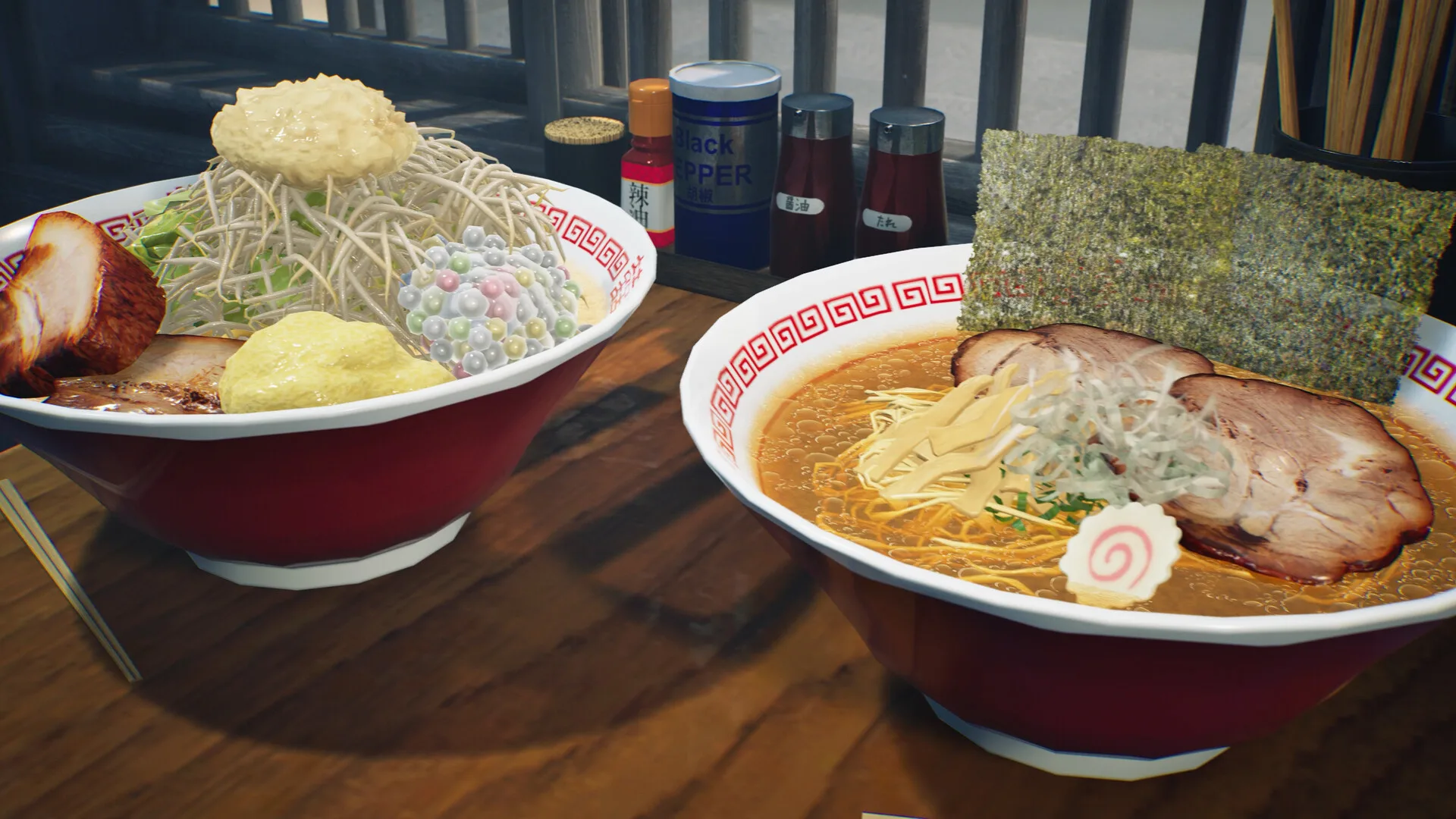
- Japanese Ramen Simulator ingredients fall into four core groups: noodles, broth components, toppings, and drinks.
- Preparation order matters: prepped ingredients placed near stations prevent order delays during rushes.
- Toppings define order accuracy: verify each request before assembling to avoid rework.
- Station distance is a hidden stat: shorter storage-to-prep routes raise service speed.
- Recheck your stock list after every Early Access update, since new ingredients can shift menu value.
Ingredient Categories Overview
In Japanese Ramen Simulator, every bowl you serve is assembled from a small set of ingredient families: noodles, broth components, toppings, and side items such as drinks. Understanding what each category does — and where it fits in the production loop — is the foundation of a fast kitchen.
The official trailer from developer Wild Dog shows the core loop clearly: prepare ingredients, cook noodles, build the bowl with broth and toppings, then serve the customer. Ingredient handling is the first step of that chain, and mistakes here cascade through the entire service.
Video Highlights:
- Six-player cooperative ramen shop operation
- Divided preparation, cooking, and service roles
- Ingredient stations placed close to cooking equipment
- Original recipe creation using different ingredient combinations
The table below summarizes each ingredient category and its role in the workflow.
| Category | Core Role | Workflow Stage | Prep Priority |
|---|---|---|---|
| Noodles | Base of every bowl, must be cooked | Cooking station | ★★★★★ |
| Broth components | Define the soup base of each order | Preparation + assembly | ★★★★★ |
| Toppings | Match specific customer requests | Final assembly | ★★★★ |
| Drinks and sides | Extra menu revenue | Separate station | ★★★ |
| Serving bowls and dishes | Required container for every order | Assembly + cleaning | ★★★ |
Gather and prepare noodles, broth components, and common toppings before the customer rush starts. Pre-preparation is the single biggest factor in preventing order delays when several customers arrive at once.
How to Obtain and Manage Ingredients
Ingredients flow into your kitchen through storage and ingredient stations. Your job is to keep those stations stocked, keep prepared items close to the cooking area, and restock the moment supplies run low — not after.
Follow this loop to keep ingredient handling efficient:
Inspect Storage Before Opening
Check the cooking area, ingredient stations, serving area, and customer space. Identify where each ingredient is stored and where completed bowls are placed, and clear frequently used stations before customers arrive.
Prep Common Ingredients
Prepare the ingredients needed for expected orders — noodles, broth components, and popular toppings — in an organized sequence. Keep prepped items close to their stations.
Cook and Assemble to Order
Process noodles, combine with the selected broth, and add the exact requested toppings. Always confirm the active order instead of assembling from memory.
Restock Immediately
After serving several bowls, return to storage and restock before the next wave of orders. Restocking late is a common cause of stalled kitchens.
Do not wait until an order arrives to start every preparation task. Do not mix up bowls when multiple orders are active, and in multiplayer, communicate before taking over another player's station.
Ingredient Tier Guide by Restaurant Stage
Not every ingredient earns its place on your menu at every stage. Rank ingredients by earning potential, preparation flow, customer demand, and bottleneck risk — then match your menu to your restaurant's current capacity.
| Tier | Label | Best For | Key Criteria |
|---|---|---|---|
| S | High-efficiency staples | Early expansion, high-volume service | High earnings, predictable prep, broad demand |
| A | Reliable specialty combinations | Mid-game menu development | Good appeal, moderate complexity |
| B | Situational options | Demand-based menu tweaks | Customer-dependent, variable prep time |
| C | Complex choices | Late-stage specialization | Long prep chains, congestion risk |
S Tier - Staples
- High earning potential
- Short, predictable prep flow
- Broad customer demand
- Low bottleneck risk
A Tier - Specialty
- Strong menu variety value
- Moderate prep complexity
- Works alongside staples
- Good profit contribution
B Tier - Situational
- Depends on customer preference
- Sensitive to station distance
- Use within a balanced menu
C Tier - Complex
- Longer preparation chains
- Higher congestion risk
- Needs staff or team support
These tiers reflect the current Early Access build. Balance adjustments and newly added ingredients can shift rankings, so recheck your menu after each patch from the official Steam community hub.
Ingredients and Kitchen Layout
Ingredient value depends heavily on placement. A top-tier ingredient stored far from your prep station performs worse than a modest ingredient kept within arm's reach. Plan storage positions around walking distance and traffic flow.
| Layout Type | Ingredient Placement Strategy | Problem Solved |
|---|---|---|
| Solo | Frequently used ingredients next to prep area; cooking and serving within one short loop | Repeated long walks by a single player |
| Two-player | Shared ingredients between both zones without blocking the central route | Players competing for the same station |
| Six-player | Dedicated prep, cooking, serving, and cleaning zones with multiple access routes | Crowding and blocked ingredient access |
Key layout rules for ingredient stations:
- Shorten the route between storage and preparation first — it is the most traveled path.
- Avoid placing essential ingredient stations at narrow entrances or corners.
- Keep cleaning and dish routes separate from the busiest cooking path.
- Keep prepped ingredients near their relevant stations during rush periods.
A prepped service batch — prepared noodles, broth components, and common toppings held near stations — is the strongest pattern for busy periods and cooperative kitchens. Assemble each bowl only after confirming the active order.
Ingredient Workflow Checklist
Use this checklist to audit your ingredient handling before and during each service day.
Daily Ingredient Audit:
- Inspect all ingredient stations before opening
- Prep noodles, broth components, and common toppings pre-rush
- Verify every order's requested toppings before assembly
- Restock storage immediately after serving several bowls
- Review menu value after each Early Access content update
In solo play, replace verbal coordination with a fixed personal workflow: prep, cook, assemble, serve, reset. In co-op, assign one player to ingredient and prep duty who reports shortages immediately and announces which ingredients are ready.
FAQ
Q: What are the main Japanese Ramen Simulator ingredient types?
Ingredients are organized into noodles, broth components, toppings such as classic ramen garnishes, drinks and side items, and serving bowls or dishes. Noodles and broth form the base of every bowl, while toppings are matched to each customer's specific request.
Q: When should I prepare ingredients in Japanese Ramen Simulator?
Prepare noodles, broth components, and common toppings before the customer rush begins. Waiting until orders arrive to start preparation is one of the most common early mistakes and causes cascading delays across the whole service.
Q: How does ingredient handling differ in six-player co-op?
In cooperative sessions, divide the workflow so one player handles ingredients and prep, reporting shortages immediately, while others cover cooking, assembly, service, and cleaning. Announce station changes before moving into another player's task to avoid duplicate work.
Q: Do ingredient tiers change with updates?
Yes. Japanese Ramen Simulator is in Steam Early Access, and the developer continues updating the game based on community feedback. Balance changes and new ingredients can shift which combinations are most efficient, so review the official Steam announcements before relying on older rankings.