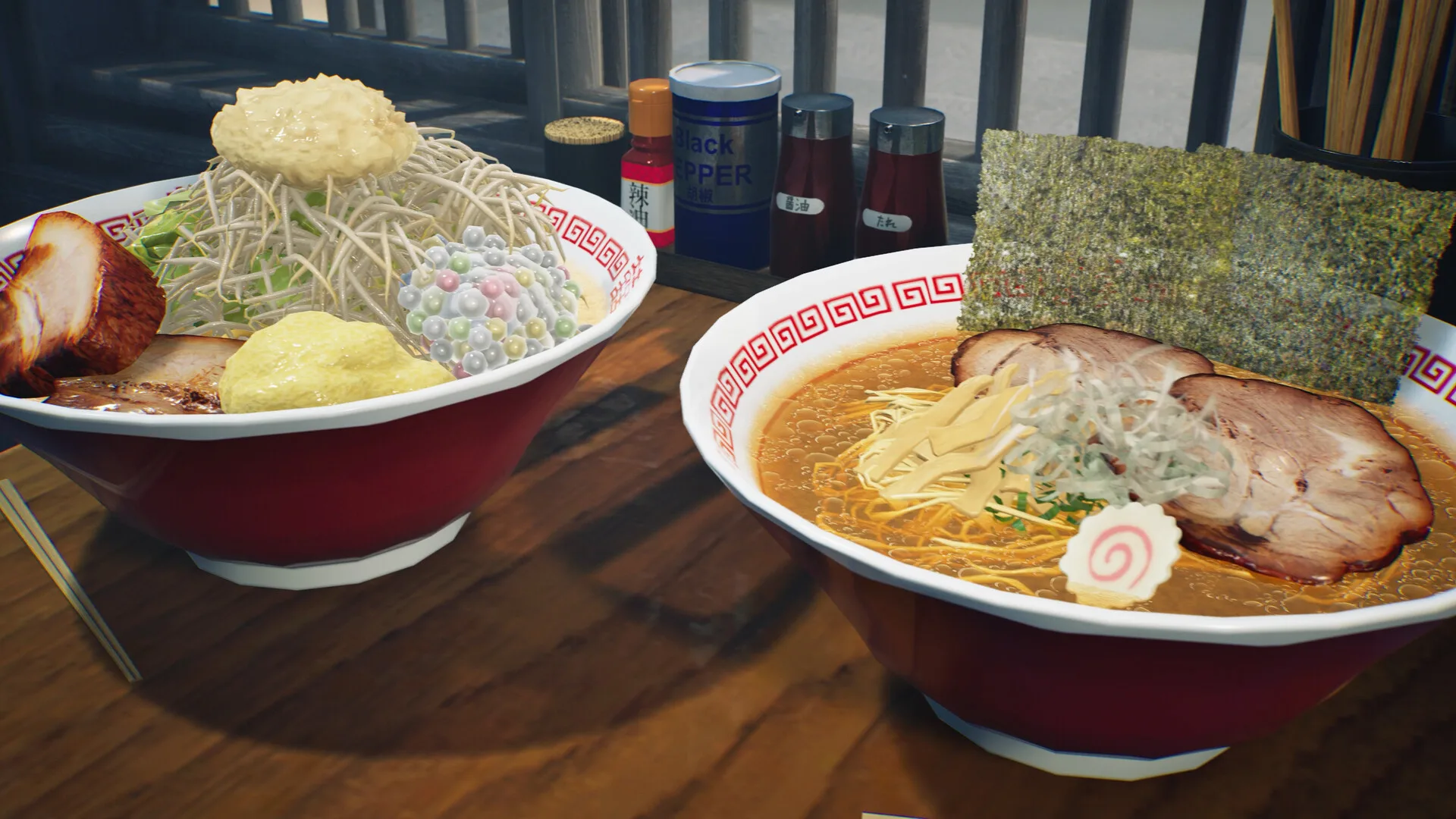
- Japanese Ramen Simulator recipes combine noodles, broth, and toppings in a fixed prep order
- Preparation before the rush is the single biggest factor in fast, accurate service
- Basic bowls first: master the noodle-broth loop before adding complex toppings
- Batching ingredients near stations cuts travel time during peak hours
- Co-op kitchens should assemble each bowl only after confirming the active order
How Japanese Ramen Simulator Recipes Work
In Japanese Ramen Simulator, every menu item is built from a consistent production loop: prepare ingredients, process noodles, combine the broth, add toppings, and serve the finished bowl. Recipe mastery is less about memorizing a list and more about organizing your kitchen so that each stage flows into the next without wasted movement.
Video Highlights:
- Shows up to six players cooperating in one ramen shop
- Demonstrates divided cooking tasks and shared shop management
- Highlights ingredient prep, noodle cooking, and original recipe creation
- Reveals the customer service flow that recipes feed into
The core recipe structure can be summarized in the table below:
| Recipe Stage | Action | Key Detail |
|---|---|---|
| Ingredient prep | Gather noodles, broth, toppings | Do this before the customer rush |
| Noodle cooking | Process noodles at cooking equipment | Keep equipment clear between orders |
| Broth combining | Match broth to the order | Confirm the order, not memory |
| Topping assembly | Add requested toppings | Check combination before handoff |
| Service | Deliver to the correct customer | Reset and restock immediately after |
The game is in Early Access (released October 9, 2026 on Steam), so new ingredients and recipe content will continue to arrive. Recheck combinations after each update, since balance changes can shift which bowls perform best.
Core Recipe Patterns and Combinations
Four recipe patterns cover nearly every situation in the game, from your first solo bowl to a packed six-player service. Each pattern differs in preparation depth and the operational pressure it can handle.
| Recipe | Required Resources | Best For | Performance Focus |
|---|---|---|---|
| Basic Noodle-and-Broth Bowl | Noodles, broth, serving bowl | Learning the core loop, simple orders | Fast prep, consistent serving |
| Topped Ramen Bowl | Noodles, broth, requested toppings, bowl | Order accuracy and topping management | Avoiding topping mistakes, less rework |
| Prepped Service Batch | Prepared noodles, broth components, common toppings, storage | Busy service, co-op kitchens | Reduced travel, no shortages |
| Custom Menu Experiment | Noodles, broth, selected toppings, stations | Original menus, layout testing | Variety vs. prep-time balance |
Basic Noodle-and-Broth Bowl
- Simplest production loop
- Ideal first-day menu item
- Teaches the serve-and-reset rhythm
- Lowest risk of order errors
Topped Ramen Bowl
- Adds topping accuracy training
- Requires correct combination per order
- Slightly longer assembly time
- Good bridge to specialty menus
Prepped Service Batch
- Built for peak hours
- Ingredients staged near stations
- Bowls assembled only after order confirmation
- Restock triggered after several serves
Custom Menu Experiment
- Original recipe creation
- Test during low-pressure periods
- Keep successful combos as repeatable patterns
- Balances variety with prep time
Do not wait until an order arrives to start every preparation task. Bowls assembled purely from memory instead of the confirmed order are the leading cause of rework and wasted ingredients.
Step-by-Step: Building a Topped Ramen Bowl
The topped ramen bowl is the standard recipe most orders are built around. Follow this sequence every time to keep service consistent.
Prepare the Noodles
Process noodles at the cooking equipment before anything else. Keep the cooking area supplied so multiple orders can move through without waiting.
Prepare the Broth
Match the broth component to the active order. Confirm the order details rather than assuming the previous broth applies.
Combine in the Serving Bowl
Place the noodles into the bowl first, then add the broth. A fixed assembly order prevents mistakes when several bowls are active at once.
Add the Requested Toppings
Apply the toppings in the exact combination the customer requested. Double-check the bowl against the order before handoff.
Serve and Reset
Deliver the bowl promptly, then return to the kitchen to restock ingredients and prepare the next batch. This rhythm keeps the shop organized.
A consistent serve-and-reset loop — deliver, restock, prep — keeps the kitchen from becoming disorganized during multi-order rushes, especially in co-op sessions.
Menu Planning by Restaurant Stage
Recipe choices should match your restaurant's growth stage, the number of players, and your kitchen layout. The ranking criteria below mirror how the in-game tier evaluation works: earning potential, preparation flow, customer demand, and bottleneck risk.
| Tier | Label | Best For | Ranking Basis |
|---|---|---|---|
| S | High-efficiency staples | Early expansion, high volume | High earnings, short prep flow, broad demand, low bottleneck risk |
| A | Reliable specialty combos | Mid-game menu development | Good appeal, useful profit, moderate complexity, pairs with staples |
| B | Situational options | Demand-focused adjustments | Customer-dependent, variable prep time, best within a balanced menu |
| C | Complex or low-efficiency | Late-stage specialization | Longer prep chain, congestion risk, needs staff or strong demand |
In multiplayer, organize the recipe workflow by station ownership:
| Co-op Role | Recipe Responsibility |
|---|---|
| Order and Service Coordinator | Announces order requirements, delivers finished bowls |
| Ingredient and Prep Worker | Prepares noodles, broth components, and toppings ahead of demand |
| Cook and Assembly Worker | Handles cooking and combines each bowl to order |
| Flexible Support | Restocks ingredients and clears bottlenecks between stations |
State which order is being assembled before combining a bowl. Announcing station changes prevents duplicate bowls — the most common recipe failure in six-player kitchens.
Recipe Optimization Checklist
Use this checklist to audit your recipe workflow before and during each service session.
Recipe Workflow Audit:
- Frequently used ingredients prepped before the customer rush
- Noodles, broth components, and toppings staged near their stations
- Assembly begins only after confirming the active order
- Restock performed immediately after several bowls are served
- Custom combinations tested during low-pressure periods only
Recipe speed depends heavily on kitchen layout. Shorten the route between storage and preparation, and keep cleaning routes separate from the busiest cooking path. A compact loop is worth more than a longer menu in the early game.
Recipe FAQ
Q: What is the basic recipe structure in Japanese Ramen Simulator?
Every ramen recipe follows the same production loop: prepare ingredients, cook the noodles, combine the broth in a serving bowl, add the requested toppings, and deliver the finished bowl to the correct customer.
Q: Should I prepare ingredients before customers arrive?
Yes. Pre-preparation is the most effective way to prevent order delays when several customers arrive together. Stage noodles, broth components, and common toppings near their relevant stations before the rush.
Q: How do recipes change in six-player co-op?
In co-op, recipes work best when divided into preparation, cooking, assembly, and service responsibilities. Each player should announce which order they are assembling and report ingredient shortages immediately to avoid duplicate bowls.
Q: How do I create original recipes safely?
Test custom noodle, broth, and topping combinations during low-pressure periods. Keep successful combinations as repeatable preparation patterns, and balance menu variety against the extra preparation time it creates.