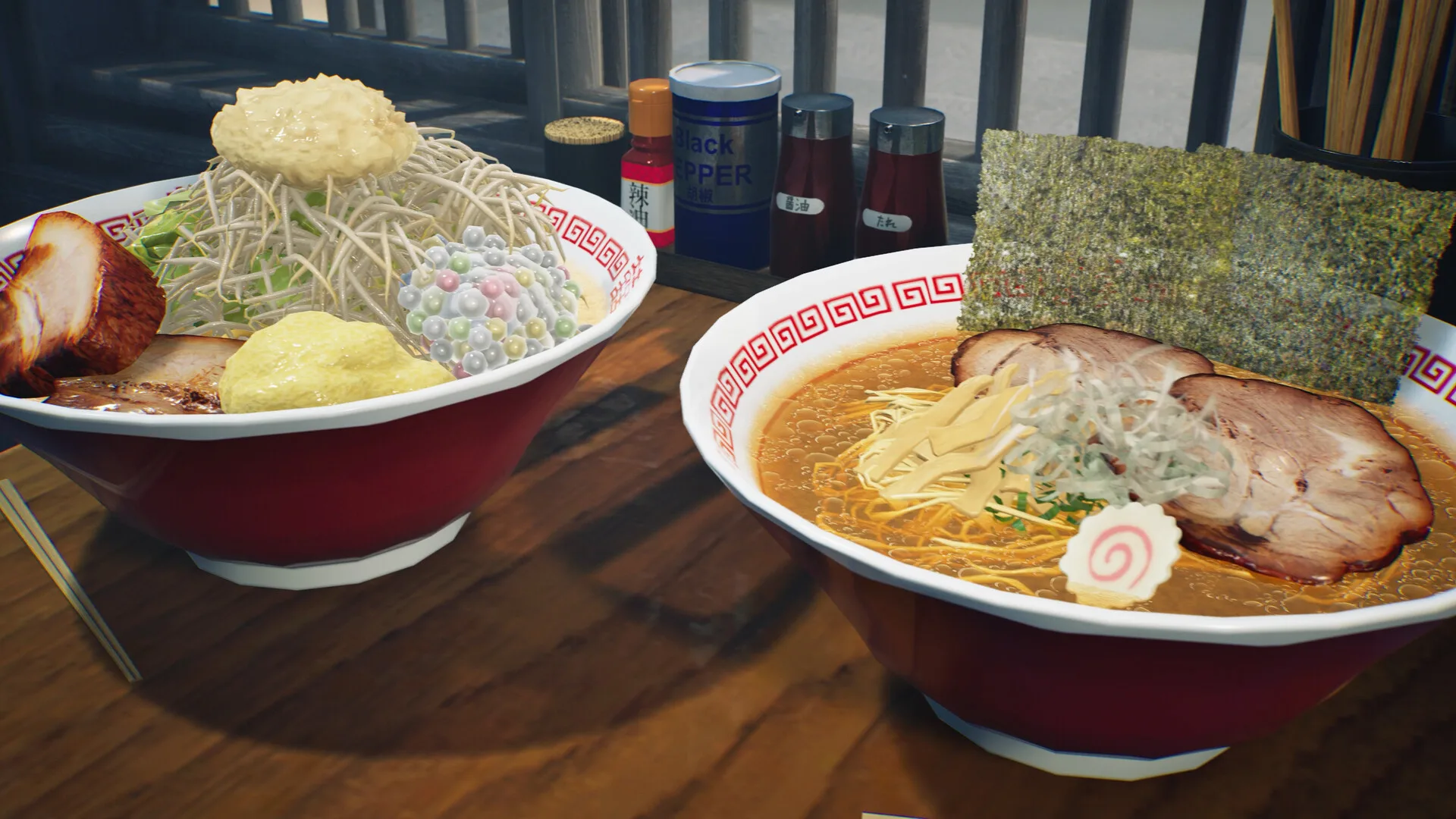
- Japanese Ramen Simulator staff exist to absorb repetitive work like cleaning and dish handling.
- Hire only when a chore measurably delays orders — not at the very start of your run.
- Solo players should prioritize the task that interrupts their single workflow loop the most.
- Co-op teams of up to six usually handle tasks with players before adding paid support.
- Cost control matters: compare assistance costs against revenue lost from delayed service.
How Staff Fit Into Your Ramen Shop
In Japanese Ramen Simulator, your core gameplay loop is preparation, cooking, assembly, and service. Staff and assistance functions sit outside that loop — they handle the chores that interrupt it. As your restaurant grows and customer volume rises, cleaning tables and washing bowls start stealing time directly from cooking and serving. That is the exact moment staffing decisions become relevant.
Video Highlights:
- Up to six players cooperating in one ramen shop
- Division of labor between cooking and shop management
- Core restaurant workflow shown from prep to service
Staff never cook signature bowls better than you, and they do not replace a well-organized kitchen. Their value is purely protective: they keep your attention on high-value tasks. Understanding this framing prevents the two most common mistakes — hiring too early and burning cash, or refusing to hire and letting dirty dishes bottleneck your entire service.
If you can finish every cleaning cycle without a customer waiting longer than usual, you do not need staff yet. The moment waiting times climb because you are washing dishes, reconsider.
Staff Roles Comparison
Every support option in the game answers one question: which repetitive task is interrupting your service loop? Compare the main categories below before spending money.
| Role | Main Function | Best Time to Use | Solo Priority | Co-op Priority |
|---|---|---|---|---|
| Cleaning support | Handles repetitive cleaning that interrupts the service loop | Cleaning pulls you away during rush hours | High once demand rises | Medium |
| Dish-handling support | Reduces time collecting and washing used dishes | Dishes accumulate faster than players process them | High early if dish work breaks your cycle | Low–Medium |
| General service assistance | Covers routine tasks so players focus on prep and customers | Stable demand with several competing duties | Situational | Medium |
| No-staff plan | All duties stay under player control | Early operation or low customer volume | Works with compact layout | Works with clear role assignment |
Cleaning Support
- Removes the most frequent service interruption
- Best value once customer traffic is consistent
- Frees your movement loop between kitchen and dining area
Dish-Handling Support
- Targets the fastest-accumulating chore
- Compare cost against revenue lost from delayed orders
- In co-op, one dedicated player may be cheaper
General Assistance
- Flexible coverage for neglected duties
- Useful when several tasks compete for one player
- Avoid duplicating a task a teammate already handles
No-Staff Operation
- Lowest direct operating cost
- Requires strong task discipline and tight layout
- Viable for coordinated multiplayer teams
Hiring support before your restaurant consistently earns enough to cover operating costs creates a drain on early funds. Early Access balance can also shift, so recheck staffing value after each update.
When to Hire: Decision Framework
Use a measurable signal, not a feeling, to decide when staff earn their keep. The framework below works for both solo shops and six-player cooperative restaurants.
Track Your Interruptions
During a busy service period, note every time cleaning or dish work forces a customer to wait. Write down roughly how many orders were delayed.
Quantify the Loss
Estimate the revenue from the delayed or lost orders during that period. This becomes the benchmark the staff member must beat to be worth hiring.
Pick the Worst Bottleneck First
Hire for the single task that causes the longest interruption to your main loop — usually cleaning or dishes. Never hire for two roles at once.
Reassess After Each Growth Phase
After expanding seating, adding menu items, or entering a busier period, repeat the measurement. Demand changes can make a previously unnecessary role essential.
| Situation | Recommended Action | Reason |
|---|---|---|
| Low customer volume, early days | No staff | Repetitive tasks are manageable solo |
| Orders delayed by dirty tables | Hire cleaning support | Cleaning is the measurable bottleneck |
| Bowls pile up faster than washing | Hire dish support or assign a player | Dish backlog blocks assembly |
| Co-op with six active roles filled | Add assistance for uncovered duties | All players already committed to production |
| Revenue barely covers costs | Delay hiring | Operating cost risk outweighs benefit |
Before confirming any hire, compare the assistance cost for one full service day against the revenue you estimated losing to delays. If the numbers are close, wait one more day and measure again.
Solo vs. Co-op Staffing Plans
Solo and multiplayer shops have opposite staffing logic. A solo player has only one pair of hands, so any interruption stops everything. A six-player team has abundant hands but limited coordination, so staff should only fill genuine gaps.
| Factor | Solo Shop | Six-Player Co-op |
|---|---|---|
| First hire | Cleaning or dish support | Usually none — assign a player |
| Communication | Not needed | Announce station changes before moving |
| Layout impact | Compact loop reduces need | Zoned kitchen reduces collisions |
| Cost sensitivity | Very high early | Shared revenue softens the cost |
| Scaling trigger | Waiting times during rush | Uncovered duty during peak load |
For solo operators, build a fixed repeatable workflow: prepare common ingredients, cook, assemble, serve, and reset in the same order every time. Hire staff only when that rhythm breaks down under customer pressure.
For co-op teams, define explicit roles first — order coordination, prep, cooking and assembly, and flexible support. Staff become worthwhile when all players are committed to production and serving, and chores like cleaning consistently fall through the cracks.
Japanese Ramen Simulator launched into Steam Early Access on October 9, 2026. Staff behavior, costs, and available roles may change with balance updates, so verify current numbers against the official Steam community hub before committing to a long-term staffing plan.
Staff Management Checklist
Run through this checklist at each stage of your restaurant's growth to keep staffing decisions honest.
Staffing Milestones:
- Measured order delays caused by cleaning or dishes during a rush
- Compared assistance cost against estimated revenue loss
- Hired for one bottleneck role only, not several at once
- Defined player roles in co-op before adding paid support
- Rechecked staffing value after each Early Access update
FAQ
Q: When should I hire my first staff member in Japanese Ramen Simulator?
Hire your first staff member only when a repetitive chore like cleaning or dish washing creates a measurable service delay. If customers wait noticeably longer because you are handling chores, the assistance cost is usually justified.
Q: Is hiring staff worth it in multiplayer co-op?
Often not at first. With up to six players, it is usually more efficient to assign chores to a dedicated player. Staff become worthwhile when every player is committed to production or serving and routine duties are consistently neglected.
Q: Which staff role should solo players prioritize?
Prioritize whichever task interrupts your single workflow loop the longest. For most solo shops, that is dish handling or cleaning, since both block the prep-cook-serve cycle that a one-player restaurant depends on.
Q: Can staff replace good kitchen layout and workflow?
No. Staff absorb repetitive work, but a compact layout with short movement routes and organized prep reduces the need for assistance in the first place. Fix your layout before adding operating costs.