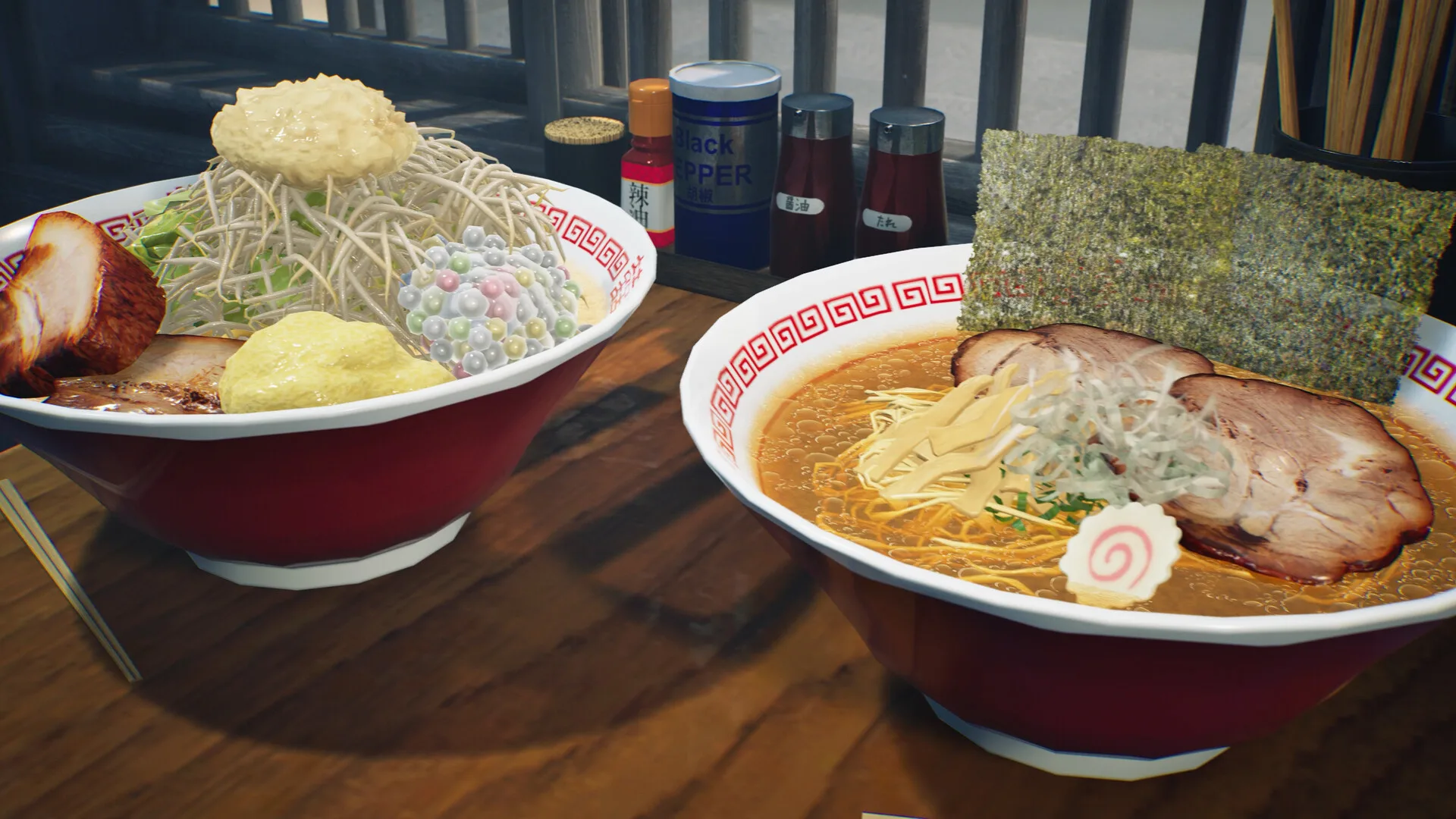
- Japanese Ramen Simulator gameplay centers on prep, cook, assemble, and serve loops in your own ramen shop.
- Solo or co-op: run the restaurant alone or with up to six players online.
- Core systems: ingredients, noodle cooking, broth, toppings, custom recipes, and shop design.
- Released into Steam Early Access on October 9, 2026 by developer Wild Dog, with 88% positive reviews.
- Best beginner move: pre-prepare ingredients before the rush instead of reacting to each order.
Japanese Ramen Simulator Gameplay Overview
Japanese Ramen Simulator gameplay puts you in charge of a growing Japanese ramen restaurant, either solo or in online co-op for up to six players. Developed and published by Wild Dog, the game launched into Steam Early Access on October 9, 2026 with a 88% positive user rating and support for 10 interface languages, including English, Japanese, Simplified Chinese, and Korean.
The official announcement trailer summarizes what the core experience looks like:
Video Highlights:
- Up to six players cooperating to run a single ramen shop
- Divided kitchen roles: preparing ingredients, cooking noodles, assembling bowls
- Shared restaurant management, from menu creation to customer service
At its heart, the gameplay loop is simple to learn but demanding to master: prepare ingredients, cook noodles, build each bowl with broth and toppings, serve the right customer, then reset your stations before the next order arrives.
| Gameplay Pillar | What You Do | Difficulty |
|---|---|---|
| Preparation | Gather noodles, broth components, toppings | ★★☆☆☆ |
| Cooking | Process noodles and combine with broth | ★★★☆☆ |
| Assembly | Add exact toppings per order | ★★★☆☆ |
| Service | Deliver bowls and handle customers | ★★☆☆☆ |
| Management | Menu, layout, staff, and income | ★★★★☆ |
Your first sessions should focus on learning the full prep-cook-assemble-serve loop, not on maximizing output. A consistent rhythm beats speed in the early days.
Core Gameplay Loop: Step-by-Step
Every successful service in Japanese Ramen Simulator follows the same repeatable sequence. Master these steps in order and your kitchen stays under control even when orders stack up.
Open the Restaurant and Review the Workspace
Inspect the cooking area, ingredient stations, serving counter, and customer space. Identify where ingredients are stored and where finished bowls go, and keep frequently used stations clear before customers arrive.
Prepare Ingredients Before the Rush
Gather everything expected orders need. Prepare noodles, broth components, and toppings in an organized sequence and keep prepped items close to the cooking and assembly stations.
Cook the Noodles and Build the Bowl
Process noodles with your cooking equipment, combine them with the selected broth, then add the requested toppings. Always confirm the finished bowl against the order rather than assembling from memory.
Serve Customers and Reset the Stations
Match each bowl to the correct customer and deliver promptly. Return to the kitchen, restock, and prepare the next ingredients so the loop never stalls.
Expand Your Menu and Shop
Once the rhythm is stable, experiment with original recipes, adjust pricing, redesign your layout, and reinvest income into the restaurant.
Do not wait for an order to arrive before starting preparation, and avoid mixing up bowls when several orders are active. One blocked task can freeze the entire kitchen workflow.
Solo vs. Six-Player Co-op Gameplay
The biggest variable in Japanese Ramen Simulator gameplay is player count. Solo runs reward a tight personal routine, while co-op rewards communication and clear role division.
Solo Operation
- Fixed personal workflow: prep, cook, assemble, serve in a repeatable order
- Short, predictable movement routes between stations
- Best with a compact menu and minimal travel distance
Two-Player Co-op
- Split preparation and serving into distinct zones
- Parallel routes so players never block each other
- Shared ingredients placed between both work areas
Six-Player Co-op
- Dedicated prep, cooking, serving, and cleaning zones
- Multiple access routes around high-traffic stations
- A flexible support player who fills gaps and clears bottlenecks
| Co-op Role | Priority | Key Responsibilities |
|---|---|---|
| Order & Service Coordinator | High | Track orders, announce requirements, deliver bowls |
| Ingredient & Prep Worker | High | Stock ingredients, prep noodles/broth/toppings, report shortages |
| Cook & Assembly Worker | High | Run cooking, build bowls, confirm each order before handoff |
| Flexible Support | Medium | Restock, relieve overloaded stations, clear bottlenecks |
In multiplayer, announce station changes before taking over another player's task. Silent task-swapping is the fastest way to create duplicate bowls or dropped orders.
Recipes, Ingredients, and Menu Strategy
Menu planning in Japanese Ramen Simulator is built around combining noodles, broth, and toppings into original recipes. The most effective approach organizes ingredients by order frequency and keeps preparation separate from final assembly.
| Recipe Approach | Preparation | Best For |
|---|---|---|
| Basic Noodle-and-Broth Bowl | Noodles + broth + bowl | Learning the core loop, simple orders |
| Topped Ramen Bowl | Noodles + broth + requested toppings | Order accuracy practice |
| Prepped Service Batch | Bulk-prepped ingredients near stations | Busy rushes and co-op kitchens |
| Custom Menu Experiment | New noodle/broth/topping combos | Original menu development |
When judging ingredients and combinations, weigh earning potential, preparation time, customer demand, and how easily they create kitchen bottlenecks. High-efficiency staples (strong returns, predictable prep, broad demand) belong at the center of your menu, while complex combinations should wait until your restaurant has the space, staff, and workflow capacity to absorb the extra pressure.
The game is still in Early Access and will keep evolving based on community feedback. Recheck rankings and recipes after balance updates, since new ingredients and systems may shift which combinations perform best.
Kitchen Layout, Staff, and Management
Layout Fundamentals
A strong layout keeps the most frequently used stations close together and separates customer movement from kitchen traffic.
| Layout Type | Core Plan | Problem Solved |
|---|---|---|
| Solo Layout | One short movement loop for cook-and-serve | Repeated walking across the same route |
| Two-Player Layout | Distinct prep/serving zones, parallel routes | Players competing for the same station |
| Six-Player Layout | Dedicated zones, open central walkway | Crowding and blocked ingredient access |
| Traffic Control | Short storage-to-prep routes, no stations in corners | Congestion and excessive walking |
Staffing Decisions
Staff become worthwhile when repetitive duties start stealing time from cooking and serving. Compare the cost of assistance against the revenue lost from delayed orders before hiring.
Early Gameplay Milestones:
- Learn the full prep-cook-assemble-serve loop
- Pre-prepare ingredients before the first rush
- Build a compact solo layout with short routes
- Assign clear co-op roles before opening
- Hire cleaning support only when it causes measurable delays
Cover the task causing the longest interruption to your work loop first — whether that means hiring help, redesigning the layout, or simplifying the menu.
FAQ
Q: How many players does Japanese Ramen Simulator support?
The game supports solo play and online co-op for up to six players. Cooperative sessions work best when the workflow is divided into preparation, cooking, assembly, service, and restocking responsibilities.
Q: What platforms is Japanese Ramen Simulator available on?
The game is available on Steam for PC and entered Early Access on October 9, 2026. It supports 10 interface languages, including English, Japanese, Korean, and Simplified Chinese.
Q: Is Japanese Ramen Simulator gameplay better solo or in co-op?
Both work well. Solo play rewards a fixed, repeatable personal workflow and a compact layout, while co-op rewards communication and clear role division. Six-player kitchens need dedicated zones to avoid crowding.
Q: Does the game have redemption codes?
No public redemption code system has been confirmed for the Early Access version. Track the official Steam announcements and the Wild Dog community channels for any future code releases.