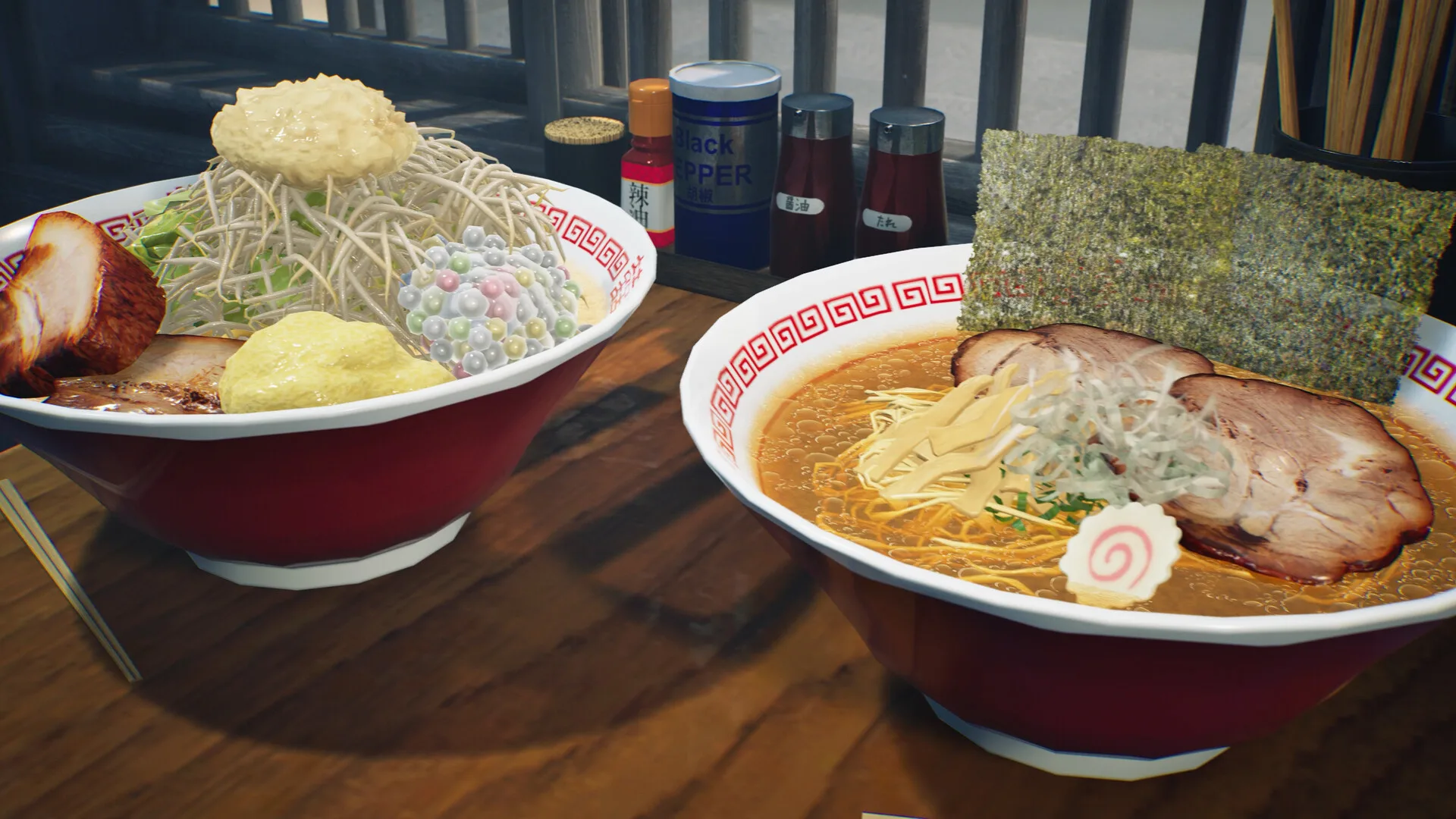
- Japanese Ramen Simulator long gameplay is built around a repeating prep, cook, assemble, and serve loop.
- Pacing matters more than speed: prepare ingredients before the customer rush, not after orders arrive.
- Up to six players can divide the kitchen into prep, cooking, assembly, service, and support roles.
- Solo sessions rely on a fixed personal workflow that replaces verbal co-op coordination.
- Early Access since October 9, 2026 on Steam, with 88% positive reviews and 10 supported languages.
What Long Gameplay Looks Like
A long gameplay session in Japanese Ramen Simulator is a continuous restaurant operation cycle rather than a series of disconnected tasks. You open the shop, inspect the workspace, prepare ingredients, cook noodles to order, assemble bowls with the correct broth and toppings, serve customers, and reset stations for the next wave. Over one or two hours, the loop intensifies as customer volume grows and your menu expands.
The official announcement trailer from developer Wild Dog shows this loop in action, including six-player cooperative service.
Video Highlights:
- Cooperative ramen shop operation with up to six players
- Division of kitchen labor: cooking, preparation, and shop management
- Original recipe creation and customer service flow
- Restaurant growth from a small opening setup
The core loop breaks down into five phases that repeat throughout any extended session:
| Phase | Core Activity | Main Risk |
|---|---|---|
| Opening inspection | Review kitchen, storage, serving, and dining areas | Blocked paths, cluttered stations |
| Pre-rush preparation | Prep noodles, broth components, and toppings | Ingredient shortages mid-service |
| Cooking and assembly | Combine noodles, broth, and toppings per order | Mixed-up bowls, wrong toppings |
| Service | Deliver bowls and manage customer flow | Delayed orders, waiting customers |
| Reset and restock | Clean, restock, and reorganize between waves | Falling behind on the next rush |
Treat the first few in-game days as a learning period. Long sessions reward a consistent rhythm over maximum output, so focus on completing the full loop cleanly before pushing for volume.
Solo vs. Co-op Session Structure
Long gameplay changes significantly depending on player count. In a solo run, you personally execute every phase in a fixed, repeatable order. In co-op, the same work splits across specialized stations, and communication becomes the glue that holds the kitchen together.
| Aspect | Solo Session | Co-op Session (2-6 Players) |
|---|---|---|
| Coordination | Fixed personal routine | Verbal callouts and role assignment |
| Bottleneck control | Manage one task at a time | Dedicated players per station |
| Prep timing | Batch prep before each rush | Continuous prep by a dedicated worker |
| Error recovery | Slower, all tasks on you | Faster, support player fills gaps |
| Layout priority | One tight movement loop | Zoned kitchen with parallel routes |
Order and Service Coordinator
- High priority role
- Monitors incoming orders
- Calls out requirements to the kitchen
- Delivers finished bowls to customers
Ingredient and Prep Worker
- High priority role
- Gathers ingredients before they are needed
- Keeps the cooking area supplied
- Reports shortages immediately
Cook and Assembly Worker
- High priority role
- Handles active noodle cooking
- Combines broth, noodles, and toppings
- Confirms each bowl matches its order
A fourth flexible support player is valuable in larger groups, restocking ingredients, clearing bottlenecks, and switching stations as needed — but always announcing the change before stepping into another player's task.
The most common six-player failure mode is everyone performing the same task at once. Assign roles before opening, and communicate before taking over anyone's station or order.
Step-by-Step Long Session Routine
Follow this routine to keep an extended session stable from opening through the busiest waves.
Open and Inspect the Workspace
Check the cooking area, ingredient stations, serving points, and customer space before opening. Identify where ingredients are stored and where finished bowls go, and keep frequently used stations clear before customers arrive.
Prepare Ingredients Before the Rush
Gather everything needed for expected orders. Prep noodles, broth components, and toppings in an organized sequence and keep prepared items close to the cooking and assembly stations.
Cook Noodles and Build Each Bowl
Process noodles with the available equipment, combine them with the selected broth, and add the requested toppings. Always follow the order requirements rather than assembling from memory.
Serve and Reset Stations
Match each completed bowl to the correct customer and deliver promptly. Then return to the kitchen, restock, and prepare the next round of ingredients without waiting for new orders to pile up.
Review and Adjust Between Waves
Between rushes, evaluate what slowed you down: long walking routes, topping mistakes, or ingredient shortages. Adjust your layout, menu focus, or role assignment before the next wave begins.
A serve-and-reset rhythm keeps the shop organized. If you find yourself sprinting between stations constantly, the problem is usually preparation timing or layout — not your speed.
Menu Strategy Over a Long Session
Menu planning determines whether long gameplay stays manageable or becomes chaotic. Organize ingredients by order frequency, keep a clear separation between preparation and final assembly, and test new combinations during low-pressure windows.
| Menu Approach | Preparation Flow | Best For | Focus |
|---|---|---|---|
| Basic noodle-and-broth bowl | Noodles, broth, combine, check order | Learning the core loop | Speed and consistency |
| Topped ramen bowl | Noodles, broth, add requested toppings | Order accuracy practice | Fewer topping mistakes |
| Prepped service batch | Batch prep before the rush, assemble on order | Busy periods and co-op kitchens | Less travel, no shortages |
| Custom menu experiment | Test new combos off-peak | Developing original recipes | Variety vs. prep time |
When ranking ingredients and combinations for a long session, weigh earning potential, preparation length, customer demand, and the risk of kitchen bottlenecks. High-efficiency staples keep service predictable; complex specialty bowls belong later, once your layout and staffing can absorb the extra steps.
Japanese Ramen Simulator entered Steam Early Access on October 9, 2026, and the developer has stated the game will keep evolving with community feedback. Recheck menu rankings after balance updates and new ingredient additions — check the official Steam page and community hub for announcements.
Session Goals Checklist
Use this checklist to measure whether a long session is actually progressing, not just running.
Long Session Milestones:
- Complete a full serve-and-reset loop without order mix-ups
- Batch prep ingredients before at least one customer rush
- Assign and hold co-op roles for an entire session
- Keep a stable movement route with no station blockage
- Test one original recipe combination during a quiet period
If cleaning or dish handling repeatedly pulls you away from cooking and serving, that measurable delay is the signal to consider hiring assistance — not before. Compare the cost of help against the revenue lost from delayed orders.
FAQ
Q: How many players does Japanese Ramen Simulator support in long gameplay sessions?
The game supports solo play and online cooperation for up to six players. Extended sessions scale from a single fixed routine in solo mode to role-based teamwork — prep, cooking, assembly, service, and support — in full six-player groups.
Q: What is the biggest mistake during long Japanese Ramen Simulator gameplay?
Waiting until an order arrives to start preparation. Long sessions stay stable when noodles, broth components, and toppings are prepped before the rush, and when players avoid mixing up bowls when several orders are active at once.
Q: Is a long session better solo or in co-op?
Both work. Solo play rewards a compact layout and a fixed repeatable workflow. Co-op rewards clear role assignment and communication before station changes. Larger groups should zone the kitchen so players do not block one another's routes.
Q: Will long gameplay content change during Early Access?
Yes. The game launched into Steam Early Access on October 9, 2026, and the developer plans ongoing updates based on community feedback. Balance changes, new ingredients, and new systems can shift which menus and layouts perform best, so revisit guides after each patch.