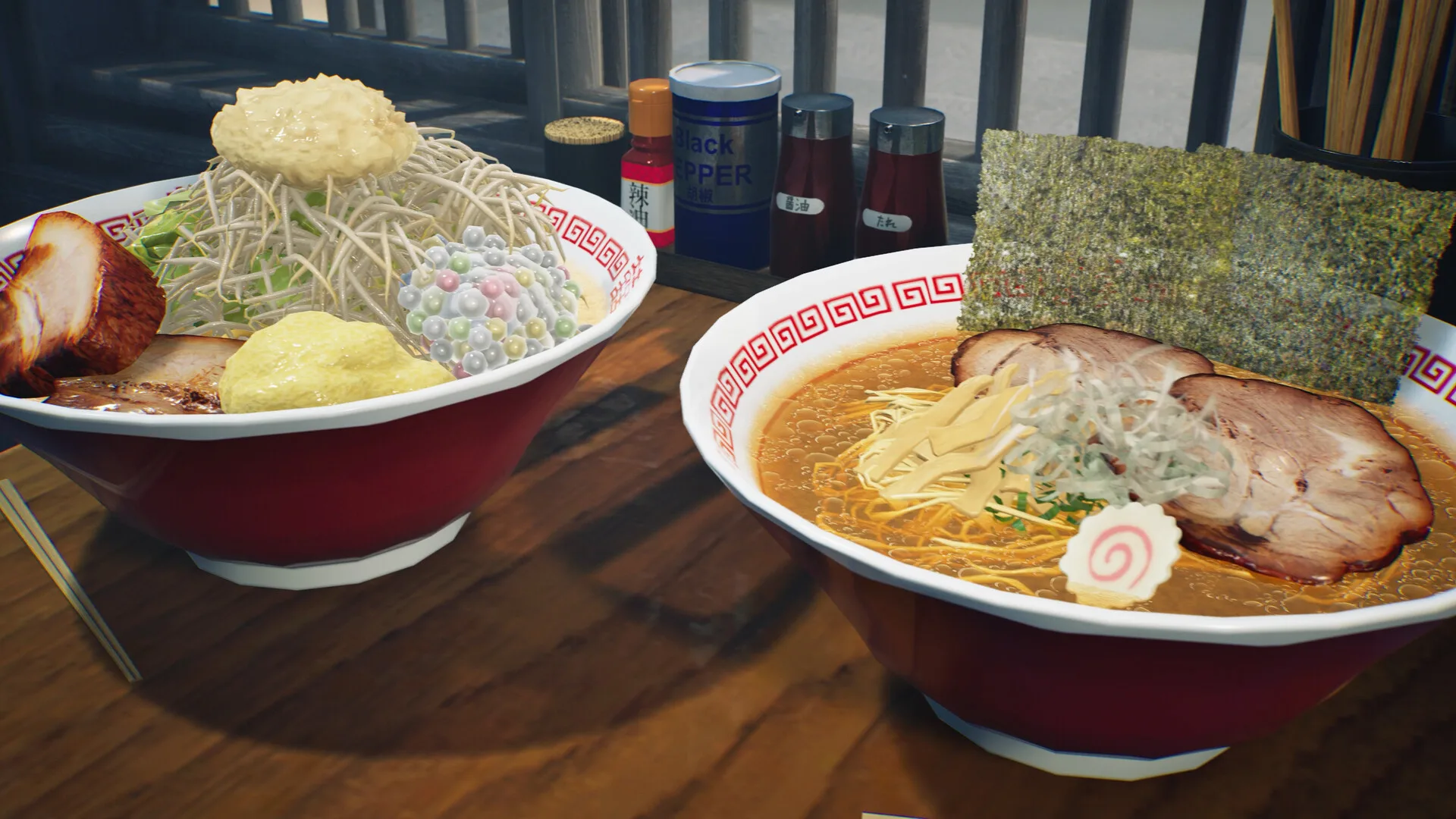
- Japanese Ramen Simulator no commentary play highlights the game's ambient kitchen sounds and cozy restaurant atmosphere.
- The game supports solo play and online co-op for up to six players on Steam Early Access.
- Cooking focuses on preparation, noodle cooking, broth assembly, toppings, and service in a repeatable loop.
- Quiet sessions work best with a compact solo kitchen layout that minimizes walking distance.
- Early Access launched October 9, 2026, with 88% positive Steam reviews and 10 supported languages.
Why No Commentary Gameplay Suits Japanese Ramen Simulator
Japanese Ramen Simulator is a cooperative ramen shop simulator from developer Wild Dog, released into Steam Early Access on October 9, 2026. Many players prefer experiencing it without commentary because the core loop — preparing ingredients, cooking noodles, combining broth, and serving customers — is naturally meditative. The ambient sounds of a working kitchen, steam rising from bowls, and the steady rhythm of orders create a relaxing atmosphere that voice-over can interrupt.
Video Highlights:
- Official announcement trailer showing six-player co-op ramen shop management
- Division of cooking tasks and shared restaurant upkeep
- Early Access release on Steam for PC
The official Steam store page confirms support for single-player and online co-op for up to six players, with ten interface languages including English, Japanese, Simplified Chinese, and Korean. For players seeking a quiet, focused session, solo mode offers full control over the kitchen rhythm, while co-op can also be played calmly when teammates use clear role assignments.
Lower the music volume in the audio settings and keep commentary off if you record. The broth simmer and noodle cooking sounds carry most of the game's atmosphere, so a simple stereo or headphone setup is enough for an ambient session.
Solo vs Co-op: Choosing Your Quiet Session Style
| Session Type | Players | Best For | Noise Level | Workflow |
|---|---|---|---|---|
| Solo | 1 | Full relaxation, fixed personal routine | Lowest | One repeatable prep-cook-serve loop |
| Duo co-op | 2 | Calm teamwork with a friend | Low | Split prep and serving zones |
| Full co-op | Up to 6 | Busy but coordinated kitchens | Moderate | Dedicated roles per station |
A solo no-commentary run replaces verbal coordination with a fixed personal workflow: prepare common ingredients, cook noodles, assemble the bowl, serve, and reset stations in the same order every time. This predictability is what makes solo play feel meditative rather than stressful.
In co-op, communication still matters. Even in a relaxed group, call out new orders and confirm when a bowl has been served to avoid duplicate work.
Solo Routine
- Fixed movement loop between stations
- Pre-prep before each rush
- Predictable, calming rhythm
Duo Split
- Two parallel routes that don't cross
- Shared ingredients placed between zones
- One player cooks, one serves
Six-Player Team
- Dedicated zones for prep, cooking, serving, cleaning
- Open central walkway
- Flexible support player fills gaps
When several players perform the same task at the same station, congestion and collisions slow everything down. Announce station changes before taking over another player's order, even in a casual voice-chat-free group using text pings.
The Core Cooking Loop, Step by Step
Every quiet session still depends on executing the production loop correctly. Follow these steps to keep the kitchen organized from opening to close.
Review the Workspace
Inspect the cooking area, ingredient stations, serving area, and customer space. Keep frequently used stations clear before customers arrive so movement stays unobstructed.
Prepare Ingredients Early
Gather the ingredients needed for expected orders. Prepare noodles, broth components, and toppings in sequence, keeping finished prep close to the cooking station.
Cook Noodles and Build the Bowl
Process the noodles, combine them with the selected broth, then add the requested toppings. Always check the order details rather than assembling from memory.
Serve and Reset
Match each bowl to the correct customer, deliver promptly, then return to restock and prepare the next round of ingredients.
Restock After Rushes
After several bowls are served, immediately replenish noodles, broth components, and toppings so the next wave of orders doesn't stall.
A consistent serve-and-reset rhythm keeps the shop from becoming disorganized — and keeps your no-commentary session smooth and watchable from start to finish.
Menus and Ingredients for Smooth Sessions
For quiet, low-pressure gameplay, favor combinations with short preparation chains and broad customer demand. Complex recipes with long chains create congestion that breaks the relaxed pace.
| Menu Approach | Preparation | Best For | Session Fit |
|---|---|---|---|
| Basic noodle-and-broth bowl | Noodles + broth + bowl | Learning the loop | ★★★★★ |
| Topped ramen bowl | Adds requested toppings | Order accuracy practice | ★★★★ |
| Prepped service batch | Bulk prep before rushes | Busy periods, co-op | ★★★★★ |
| Custom menu experiment | Free combination testing | Low-pressure downtime | ★★★ |
When developing original recipes, test new noodle, broth, and topping combinations during calm periods rather than mid-rush. Keep successful combinations as repeatable preparation patterns so your menu grows without adding stress.
Japanese Ramen Simulator is in Early Access and the developer plans continued updates based on community feedback. New ingredients and balance changes may shift which combinations perform best, so recheck rankings after each patch on the Steam Community Hub.
Kitchen Layout and Staff for Relaxed Play
A strong layout is the foundation of stress-free gameplay. Arrange stations so the most frequently used ones sit close together, and separate customer traffic from kitchen traffic.
| Layout | Recommended For | Core Idea | Problem Solved |
|---|---|---|---|
| Solo loop | 1 player | Cook and serve in one short circuit | Repeated long walks |
| Parallel duo | 2 players | Two non-crossing routes | Station competition |
| Zoned team | Up to 6 | Prep, cook, serve, clean zones | Player collisions |
| Traffic control | Any size | Avoid corner stations, open walkways | Congestion |
For staffing, hire help only when repetitive work measurably delays service. Cleaning and dish-handling support are the highest priority once customer demand makes it hard to maintain both service and upkeep. In a calm solo session, a compact layout plus a simple menu often removes the need for staff entirely.
Quiet Session Checklist:
- Shorten the storage-to-prep route
- Pre-prepare common ingredients before opening
- Keep the central walkway clear
- Set music volume low for ambient audio
- Restock immediately after each rush
If you produce no-commentary content, a tidy solo layout with a fixed routine produces the cleanest footage — viewers can follow the entire cooking loop without cuts or confusion.
FAQ
Q: Is Japanese Ramen Simulator good for no commentary gameplay?
Yes. The cooking loop is repetitive in a satisfying way, and the ambient kitchen sounds, steam effects, and steady customer rhythm create a cozy atmosphere that works well without voice-over, especially in solo mode.
Q: How many players does Japanese Ramen Simulator support?
The game supports single-player and online co-op for up to six players, according to the official Steam store page. Solo play is fully viable and offers the calmest experience for quiet sessions.
Q: Where can I play Japanese Ramen Simulator?
It is available on Steam for PC in Early Access, released October 9, 2026, with ten supported interface languages and an 88% positive user review rating at launch.
Q: How do I keep a six-player co-op session calm?
Assign dedicated roles — order coordination, prep, cooking and assembly, and flexible support — and keep the central walkway open. Announce station changes before moving into another player's task to avoid duplicate bowls and collisions.